
Cover Crop Variety Trial
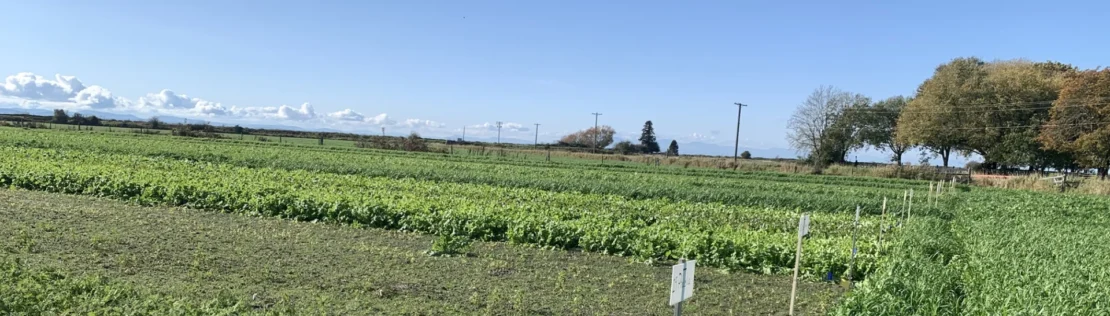
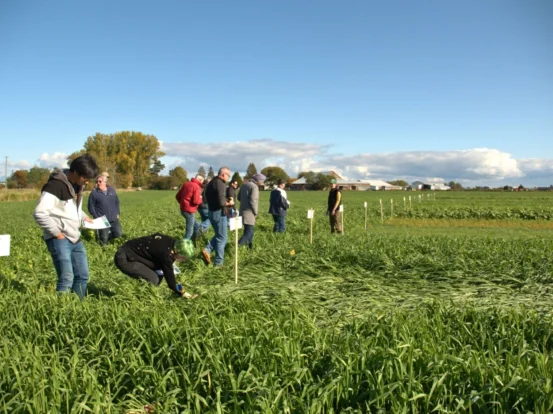
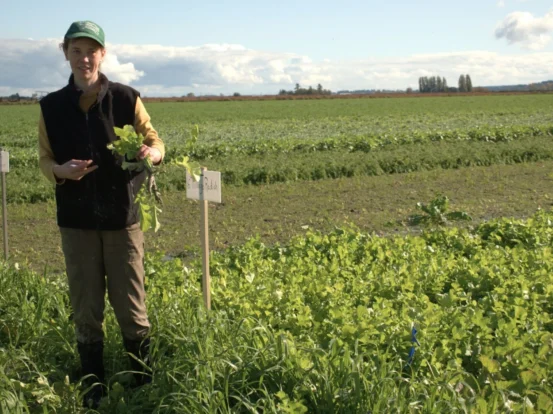
In fall of 2025, Delta Farmland and Wildlife Trust ran cover crop demonstration trials at two farm sites, after a successful first trial in 2024, in the Sumas Prairie in Abbotsford and on Westham Island in Delta, to compare how 22 cover crop species and mixes performed under different seeding dates, which varieties grow quickly, suppress weeds, add diversity to crop rotations, and potentially withstand waterfowl grazing.
Both trials, part of the BC Living Lab, included a mix of cereals (like fall rye, winter wheat, and triticale), legumes (like fava beans and peas), brassicas, sunflowers, phacelia, and custom pollinator mixes. Plots were seeded in late August and early September, and monitored throughout the fall, winter, and early spring for percent ground cover, height, weed suppression, winter survival, and grazing pressure.
Key Findings
The clearest takeaway from both sites was the importance of seeding early. Plots seeded in late August or mid-September consistently outgrew their October-seeded counterparts, October plots in Abbotsford never broke 80% cover, while in Delta they topped out at a mere 2–12%.
Overwintering success varied greatly. Fall rye, annual ryegrass, spring barley, tillage radish, and several of the multi-species mixes had good performance at both locations, establishing quickly and holding their cover into winter. Legumes like fava beans and clover, along with sunflower, were slower to germinate and patchier overall, though favas proved to be winter-hardy once they got established.
Waterfowl Grazing & Weed Suppression
A notable difference between the two sites was waterfowl grazing. The Abbotsford field saw no grazing, but the Delta site experienced heavy grazing pressure, especially on the later-seeded plots. By March, October-seeded crops in Delta had been grazed down to bare soil, with fava beans the only variety left untouched. Brassicas planted within mixes also held up much better against grazing than the same species grown alone. Delta's trial also tracked soil nitrate, finding that plots with strong cover crop growth pulled down residual soil nitrate compared to bare control plots.
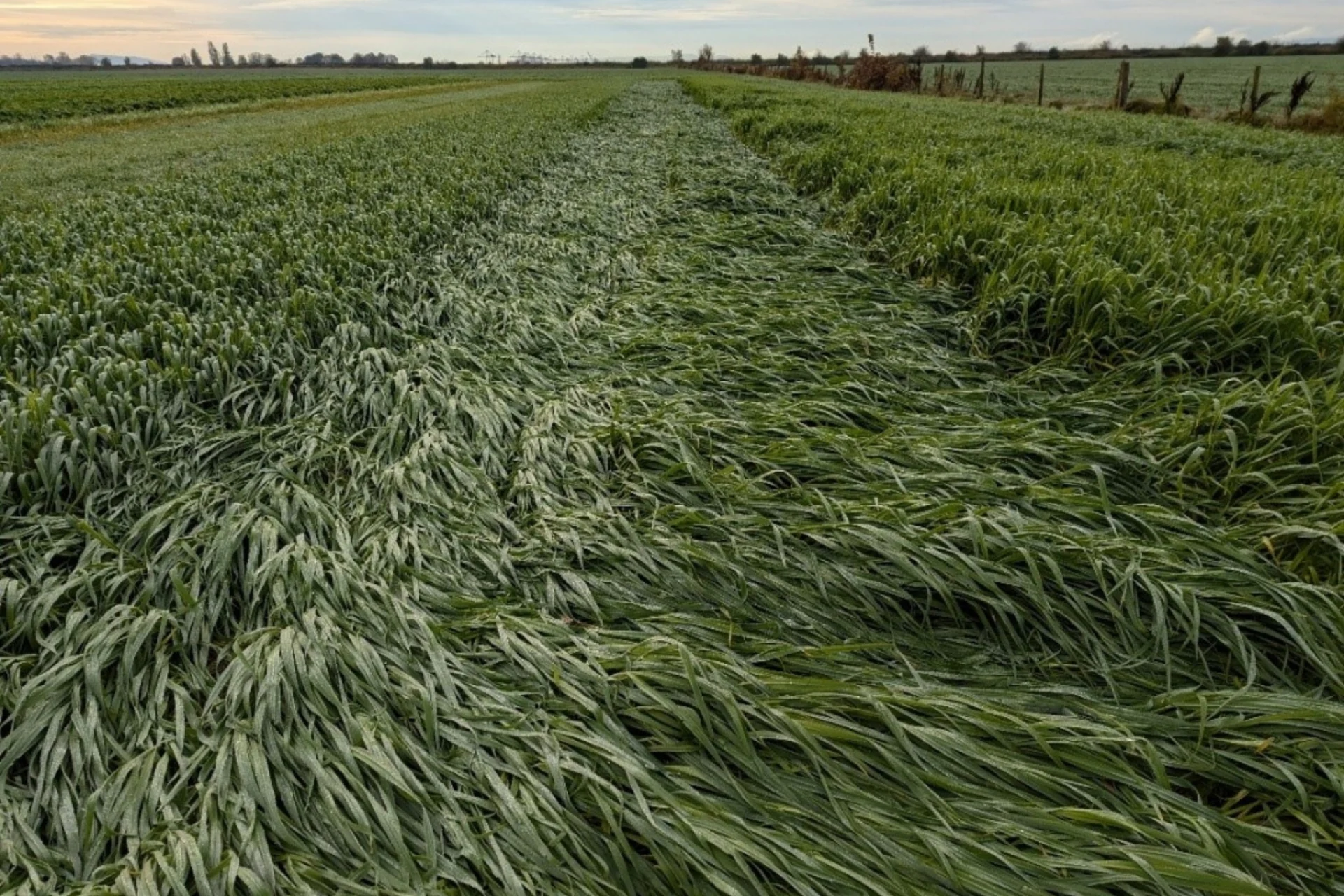
October 25, 2024.
Oats centre (fallen over), barley to the right, triticale to the left.
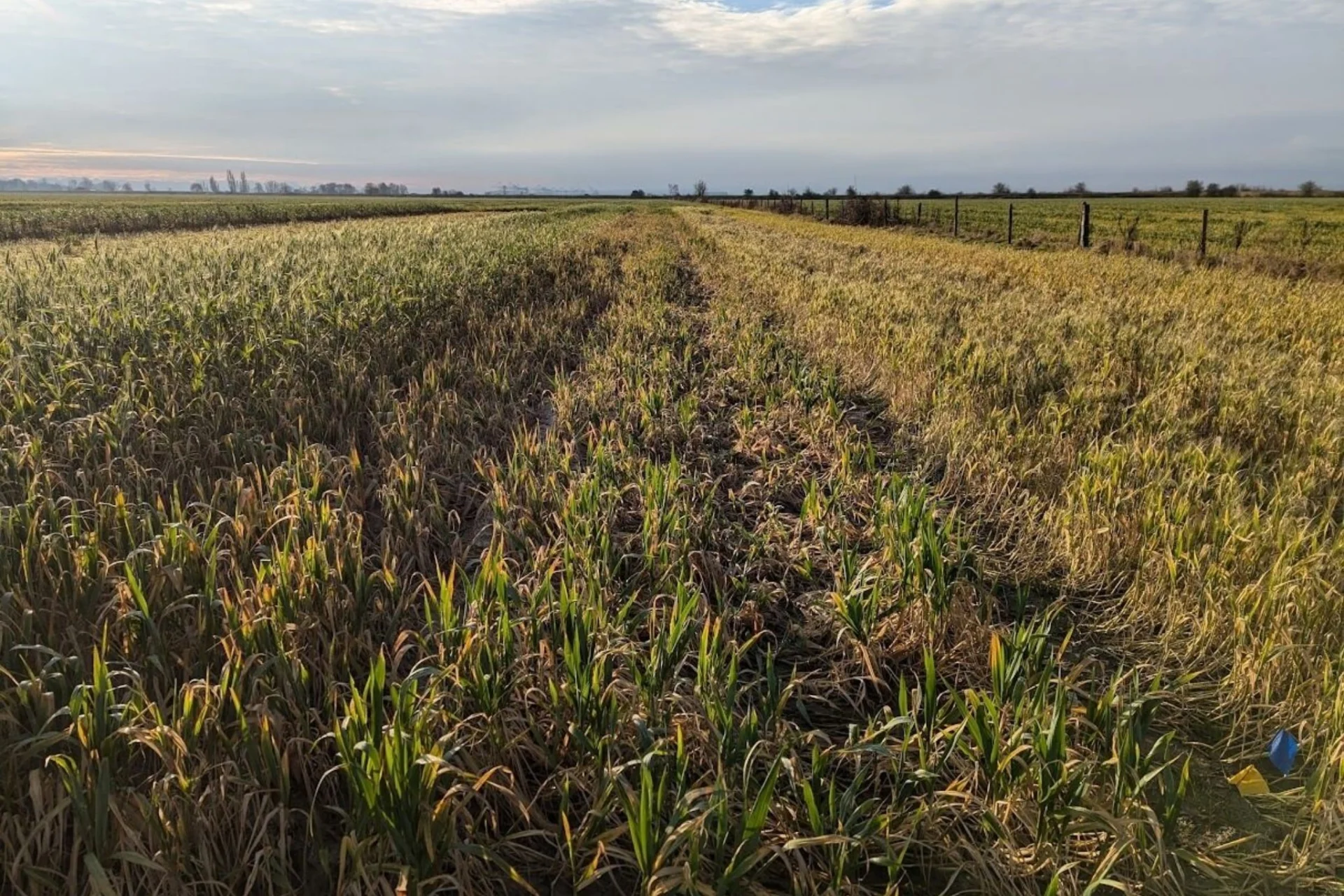
January 13, 2025.
Oats centre (fallen over), barley to the right, triticale to the left.
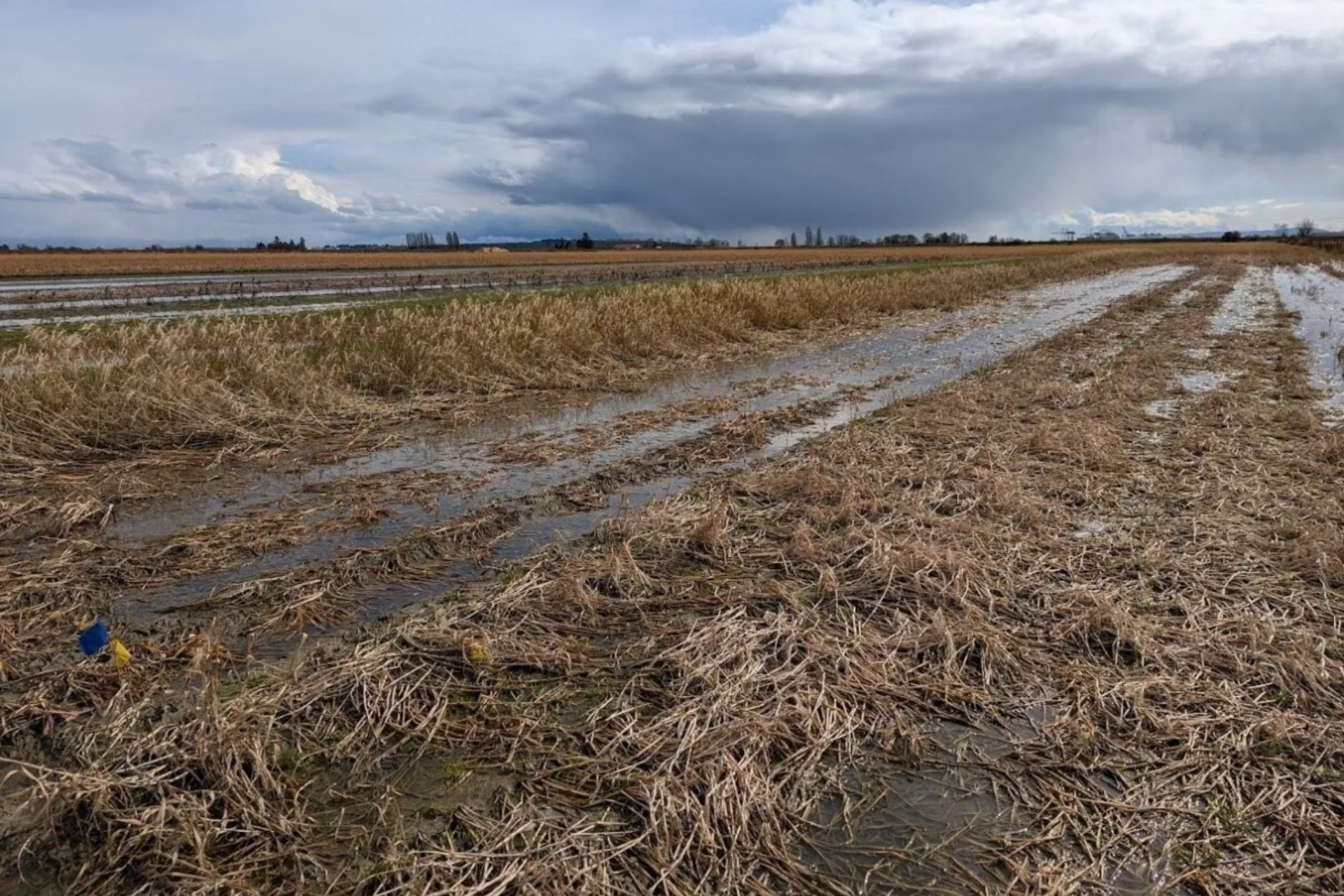
March 13, 2025.
Barley right, oats centre left, and triticale to far left (taller).
For more details on cover crop varieties, seeding rates, methods, and performance, please read our full Cover Crop Variety Trial Report. Reports include results, photos, and practical insights from the 2024 and 2025 variety trials.
Thanks to Sam Malamura for hosting the Abbotsford trial and Zellweger Farms for hosting the Delta trial and helping with seeding. Thanks to Cropthorne
Farm for the use of the Jang Seeder, to Brent Harris for sharing seed for the pollinator mixes, and to Pacific Forage Bag for providing a discount on seed and thanks to Gary Telford and Derek Hunt for help with seeding.
To learn more about the BC Living Lab, visit www.bclivinglab.ca. This field trial was funded, in part, by Agriculture and Agri-Food Canada through the Agricultural Climate Solution – Living Lab program and On-Farm Climate Action Fund.
How Can You Help?
Your donation will work towards conserving important farmland and wildlife resources contained in the Fraser River delta.