

Once among the most common bees across British Columbia, the Western Bumblebee has now been listed as a threatened species for over a decade.
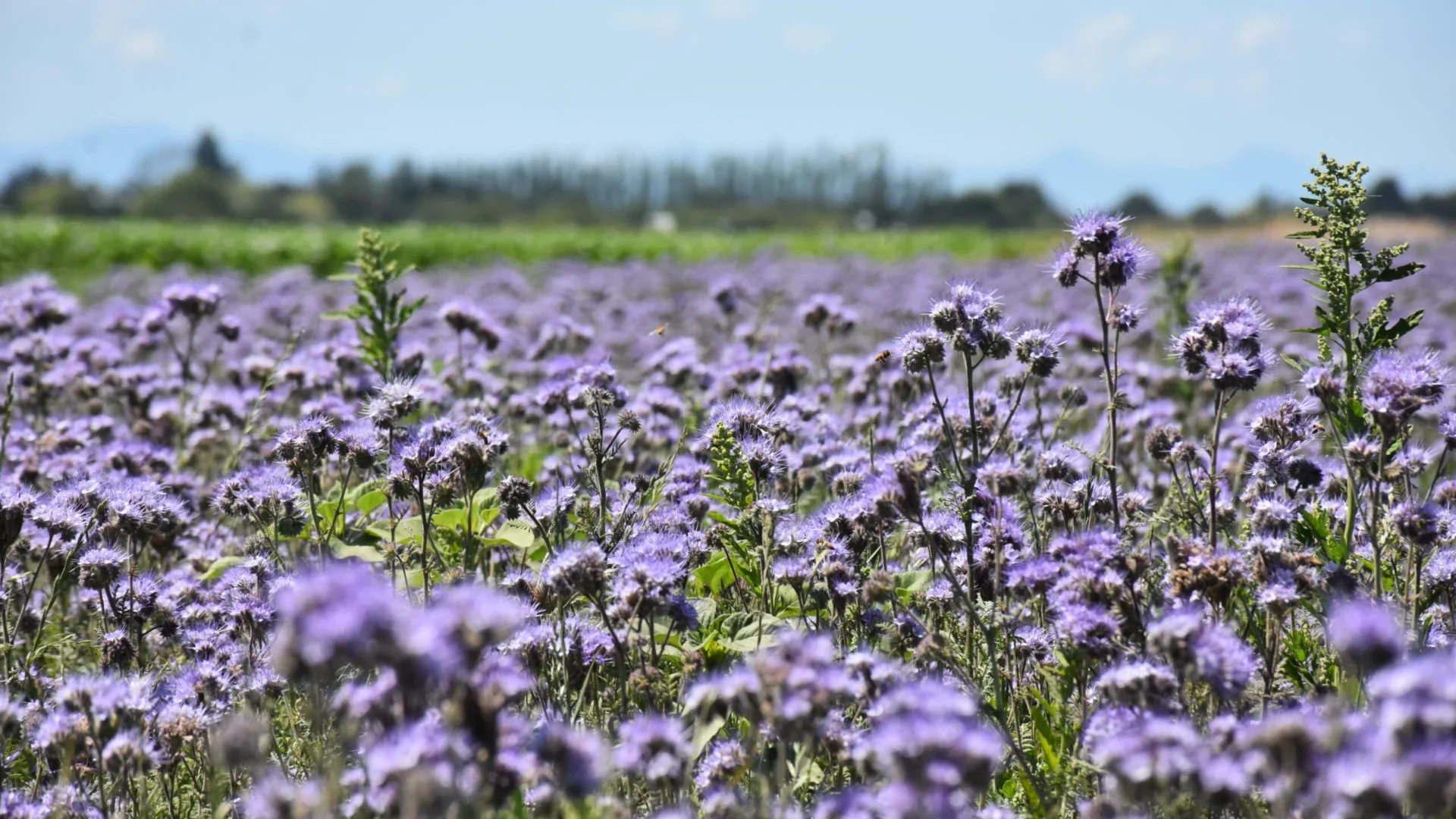
Avid gardeners and nature enthusiasts alike in the Lower Mainland may have noticed something missing outside. The western bumblebee (Bombus occidentalis) is one of BC’s native bumblebees, its distinctive white tail making it easily identifiable from other common species. The western bumblebee was once one of the most common, widespread species of bumblebee found across the Lower Mainland and Fraser Valley. Today, it is a threatened species, and spotting one is cause for excitement.
This species has an arduous history in the province, and its decline may stem from disease, commercial bumblebee use, and habitat loss.
The Western Bumblebee in B.C.
Historically, the western bumblebee had one of the widest geographic ranges of any bee in North America, found from central California all the way north to Alaska and east into Saskatchewan and the northern Great Plains. In British Columbia, the subspecies Bombus occidentalis ranges through the southern portion of the province, while a distinct subspecies, Bombus occidentalis mckayi, is found through the north of BC toward the Yukon and Northwest Territories.
Western bumblebees are habitat generalists; they are not tied to a single ecosystem and can often survive in many different habitats. Their habitat often extended to forests, farmlands, urban gardens, meadows, and grasslands. They typically nest underground, often using abandoned rodent burrows, or inside hollow decaying wood. Queens require undisturbed patches of ground to establish nests in spring and to hibernate through winter.
How to Identify It
Bumblebee coloration often differs between males and females, each of which can have multiple different colour patterns. This is the most common colour variation found in our region.
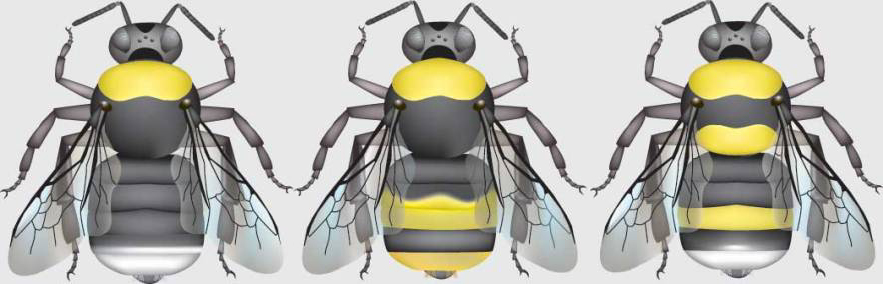
Its most reliable field mark, and the one that makes it unique among bumblebees in the Lower Mainland, is its white tail. No other bumblebee in our region has a white rump, making this feature a quick way to distinguish it from look-alikes.
Conservation Status
The western bumblebee has been listed as threatened in British Columbia for over a decade, and its southern subspecies is assessed as threatened under the Canada Species at Risk Act. Surveys have suggested that relative abundance in southern BC has declined significantly over the past three decades, with the species recorded at fewer sites and in smaller numbers than historical data would predict (Evans, 2008).
The decline of the western bumblebee is thought to have started in the 1990’s. It is not known for certain what triggered the collapse of the Western Bumblebee, but many hypothesis lean towards the spore-forming parasite known as Nosema bombi (N.bombi) (Evans, 2008). The pathogen was thought to be present in wild bees prior to greenhouse pollinators, though infection rates were low in all sampled hosts in North America (Cameron, 2016).
N.bombi is transferred to bumblebees most commonly through a shared contaminated food source, such as pollen or nectar (Otti, 2007). Bees will ingest the spores which infect the bees gut (Otti, 2007). The parasite infects different species of bumblebee at different rates, infection rates are low in Eastern bumblebees, though they do act as a carrier (Cameron, 2016). The impact of this fungus on bumblebees is still quite a mystery, studies have observed that infected queens produced smaller colonies, the fungus also impacted the survival and efficacy of adult individuals and the sperm counts of male offspring (Otti, 2007). The primary threat to wild bee populations is thought to be spillover from commercial and managed bees. A feral population of the non-native eastern bumblebee is now thought to be established in British Columbia, which adds further pressure through direct competition and disease risk (Winter, 2006).
What can you do?
The best way to help support and guide future research is by reporting any western bumblebee sightings. Platforms such as iNaturalist allow individuals with any level of bumblebee knowledge to directly submit observations, and often experts will help guide you in the right direction. At home, planting native flowering species and leaving patches of undisturbed ground for nesting support not just the western bumblebee but native pollinators broadly. Remember, if you spot a white tail on a bumblebee, it’s worth recording!
Cameron, S. A. (2016). Test of the invasive pathogen hypothesis of bumble bee decline in North America. . Proceedings of the National Academy of Sciences, 4386–4391.
Evans, E. T. (2008). Status review of three formerly common species of bumble bee in the subgenus Bombus: Bombus affinis (the rusty patched bumble bee), B. terricola (the yellowbanded bumble bee), and B. occidental. The Xerces Society.
Otti, O. &.-H. (2007). Nosema bombi: A pollinator parasite with detrimental fitness effects. Journal of Invertebrate Pathology, 118–124.
Wickramasinghe, S. (2004, April 23). UBC News. Retrieved from The University of British Columbia: https://news.ubc.ca/2024/04/introduced-bumble-bee-dominates-lower-mainland/
Winter, K. A. (2006). Importation of non-native bumble bees into North America: Potential consequences of using Bombus terrestris and other non-native bumble bees for greenhouse crop pollination in Canada, Mexico, and the United States. North American Pollinator Protection Campaign.