

Across Delta, patches of resting grasslands are helping restore farmland, and support important wildlife, from the first breeding birds at dawn to the colony of bats foraging for insects late at night, these fields are busy throughout the entire day.
Spring in the Lower Mainland often arrives with a sense of restlessness. Farmers are eager to begin working their fields, breeding birds begin searching for nest sites, and hibernating wildlife begins to wake up.
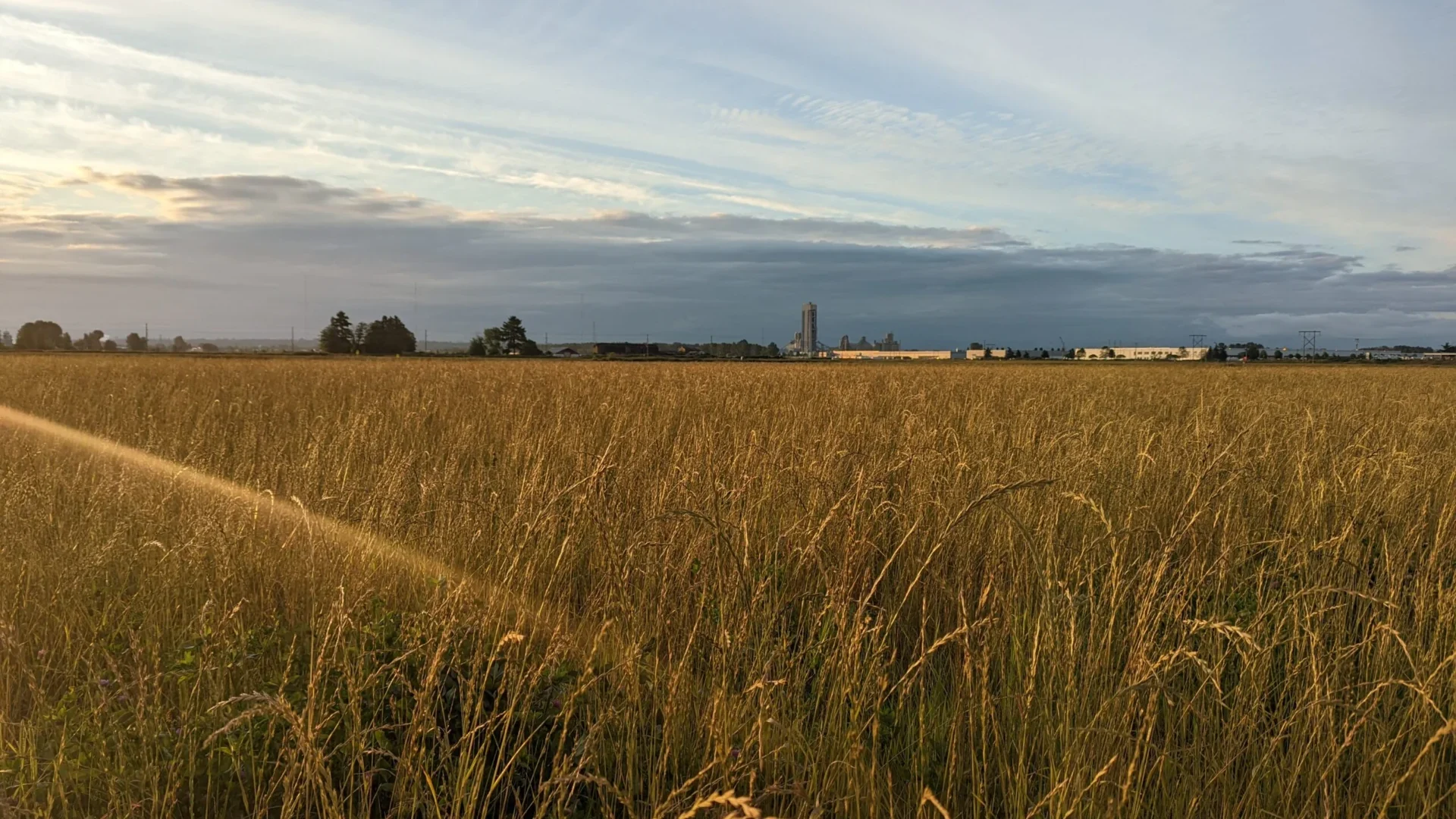
What all these things have in common is that they utilize grassland set-asides (GLSA). A GLSA is a farm field that is planted with a diverse mix of flowering species and grasses, and left undisturbed for up to 4 years. When driving by, these fields may look uncared for or forgotten compared to the neat rows of neighbouring crops, but wildlife monitoring over the past years shows how productive these fields truly are.
In a landscape where agricultural land, suburban development, and remaining natural areas coexist in close proximity, these set-asides provide refuges where wildlife needs them most.
Morning Songbirds
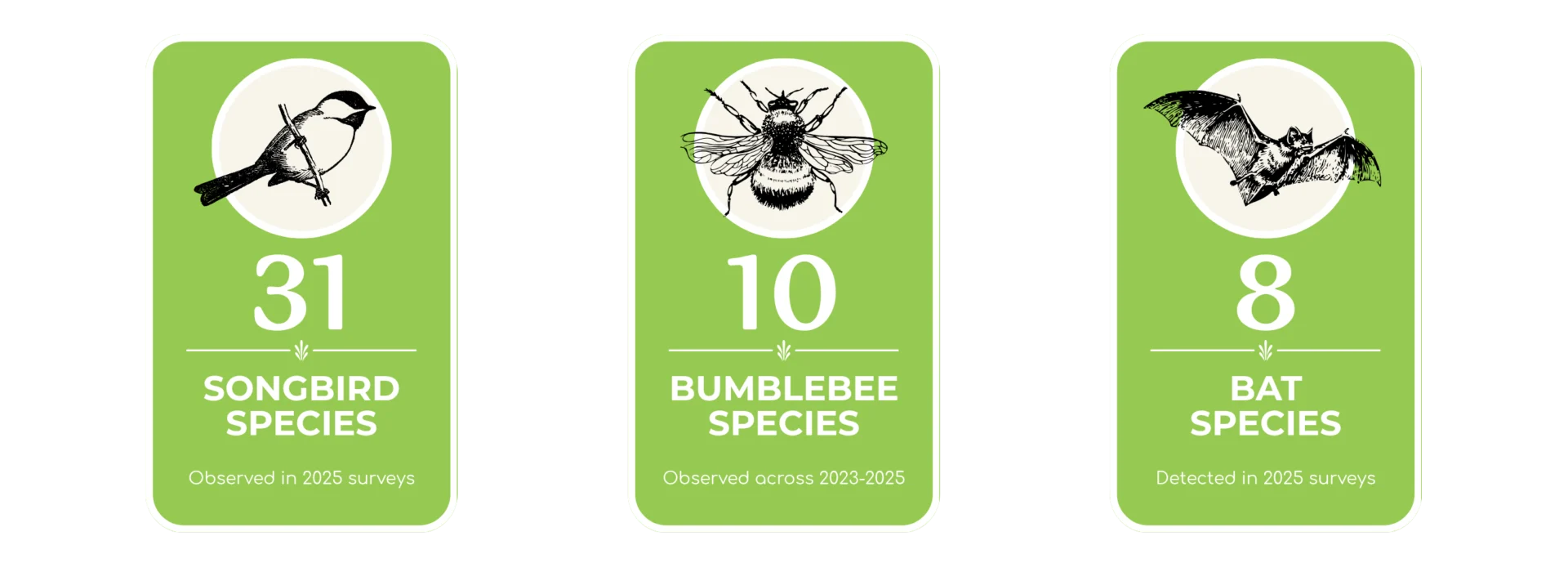
Mornings in early spring have Grassland Set-aside fields twittering with activity. Breeding bird surveys were conducted across eight Delta set-aside fields in the spring and early summer of 2025, with a total of 31 species recorded. Five species, the savannah sparrow, common yellowthroat, red-winged blackbird, brewer’s blackbird, and killdeer, were confirmed as likely breeding birds, observed on at least three of seven survey visits. These are all locally common ground or near-ground nesting birds that depend on undisturbed grassland habitat during the breeding season.
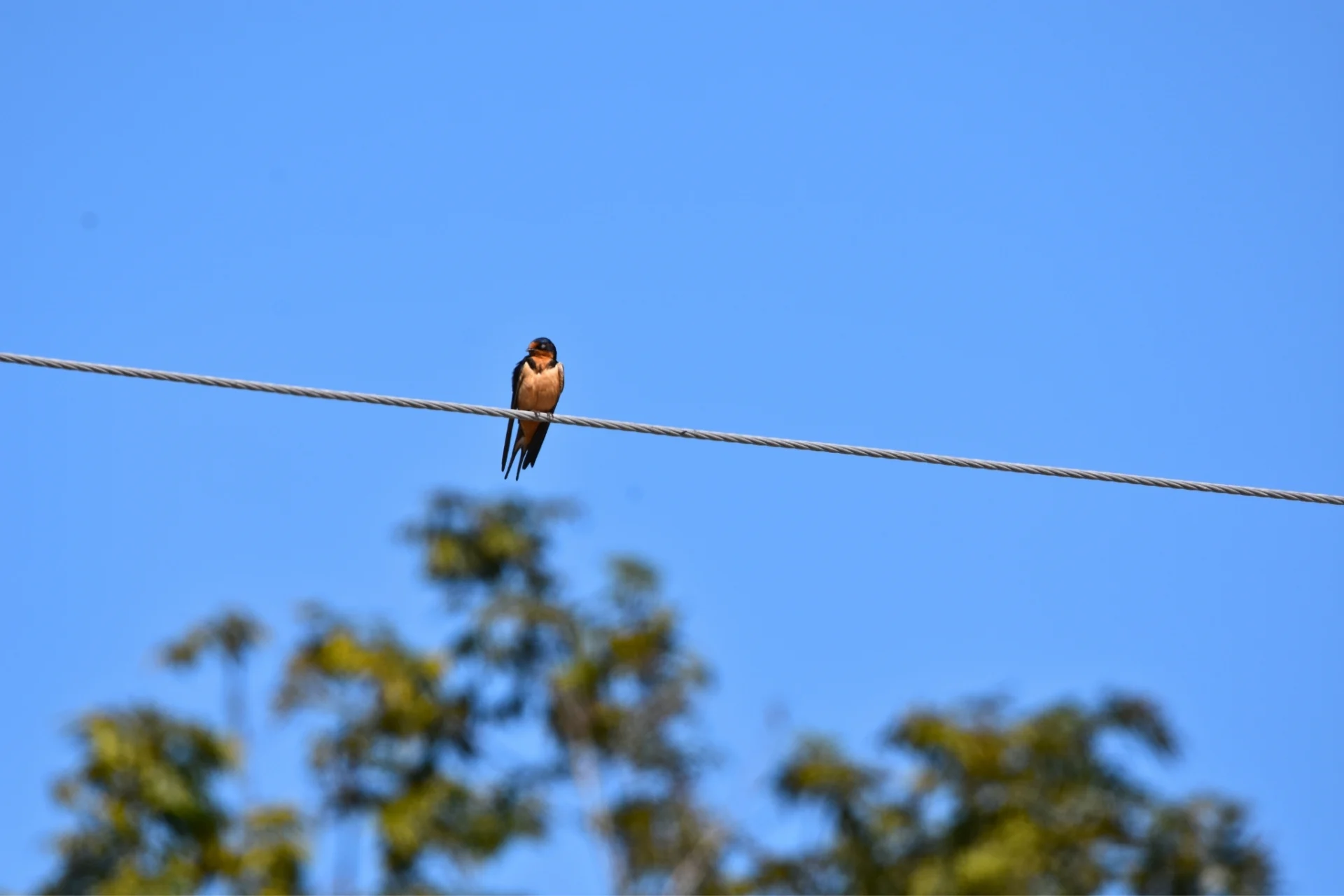
Additional species, including white-crowned sparrows, house finches, and song sparrows were regularly observed foraging within set-asides from adjacent hedgerows and shrubs. Barn swallows, which use set-asides to forage on aerial insects, have also been a consistent presence since monitoring began, though a notable decline in observations has been recorded since 2022, with the proportion of surveys recording a barn swallow dropping from 33% in 2022 to 14% in 2025. The cause of this decline is not yet fully understood.
Daytime Bumblebees
As temperatures rise through the morning, bumblebees begin to emerge from their nests, seeking flowering plants to collect pollen and nectar from. Bumblebee surveys conducted in Delta’s set-asides between 2023 and 2025 recorded a total of ten species across 587 individual bees. Activity peaks in July, where an average of 22 bees were captured within each 1-hectare survey, with clover supporting the highest number of bumblebee visits, followed by phacelia and sunflowers. Bees were also regularly observed on weedy plants not included in the original seed mix, including bull thistle, vetch, and oxeye daisies, suggesting that even weedy species have value within these fields.
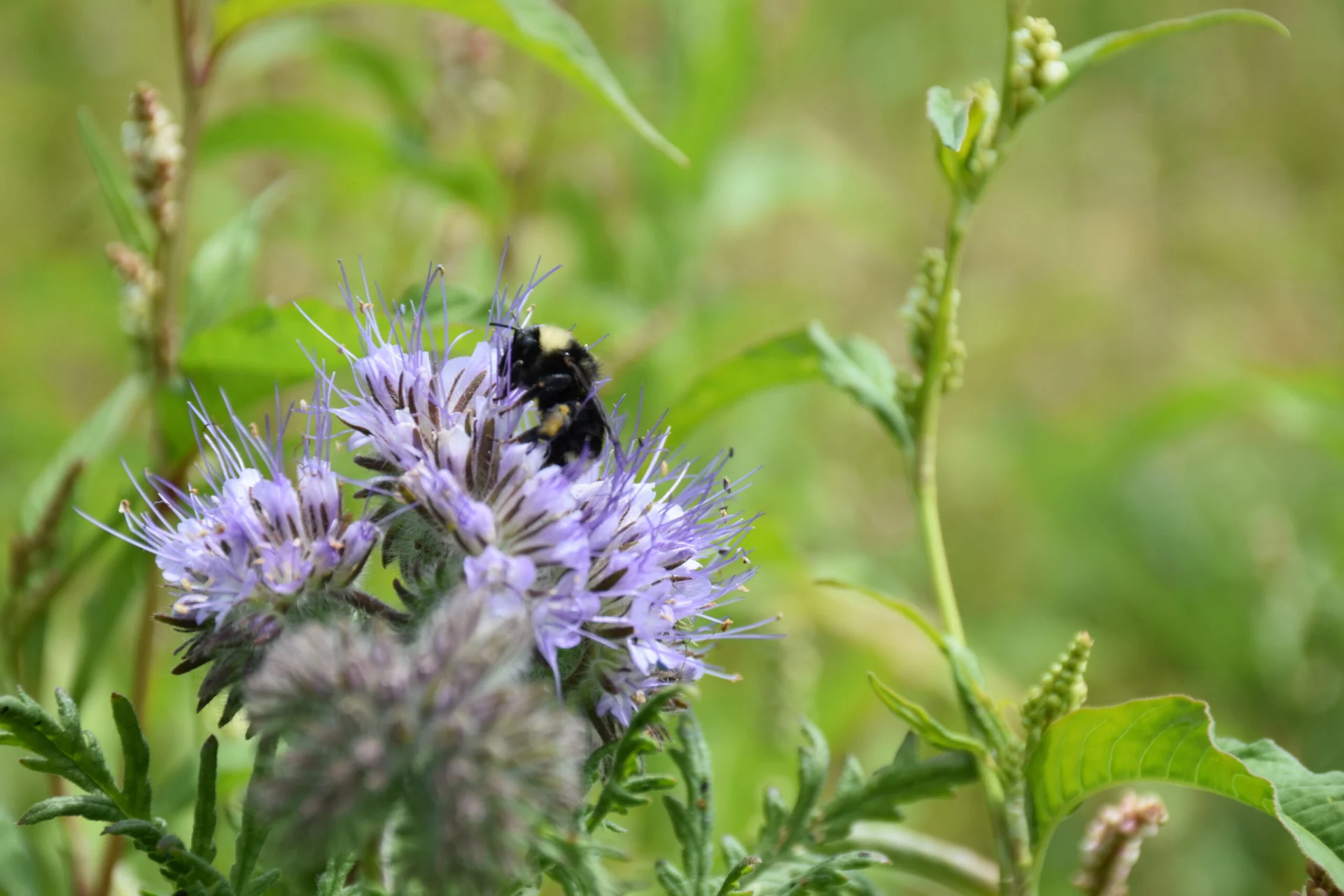
Newly planted set-asides attracted the highest number of bumblebees per survey, with activity declining as fields aged and annual flowering species like phacelia thinned out. Older fields continued to support pollinators throughout their lifespan, providing pollinator habitat even as their plant composition begins to shift to grass.
Nighttime Bats
Once the sun begins to set, bat activity over Delta’s set-asides begins to increase rapidly. Acoustic surveys conducted in 2025 detected eight species across set-aside fields and adjacent hedgerows, including three species classified as endangered by COSEWIC: the little brown bat, hoary bat, and silver-haired bat. All three were present at multiple survey sites across the season. Bat activity peaked around sunset and declined steadily through the night, which is consistent with known foraging patterns.
The Value of Undisturbed Farmland
These past three years of monitoring data from DFWT’s grassland set-aside program demonstrates that these fields provide meaningful habitat for a wide range of wildlife species across the full extent of the day. Birds, bumblebees, and bats each rely on different aspects of set-aside habitat from nesting cover to floral resources and insect abundance, yet all three groups are consistently using the same fields
To read more about research and monitoring conducted by DFWT visit our Research page to access research reports.
dqb0i6